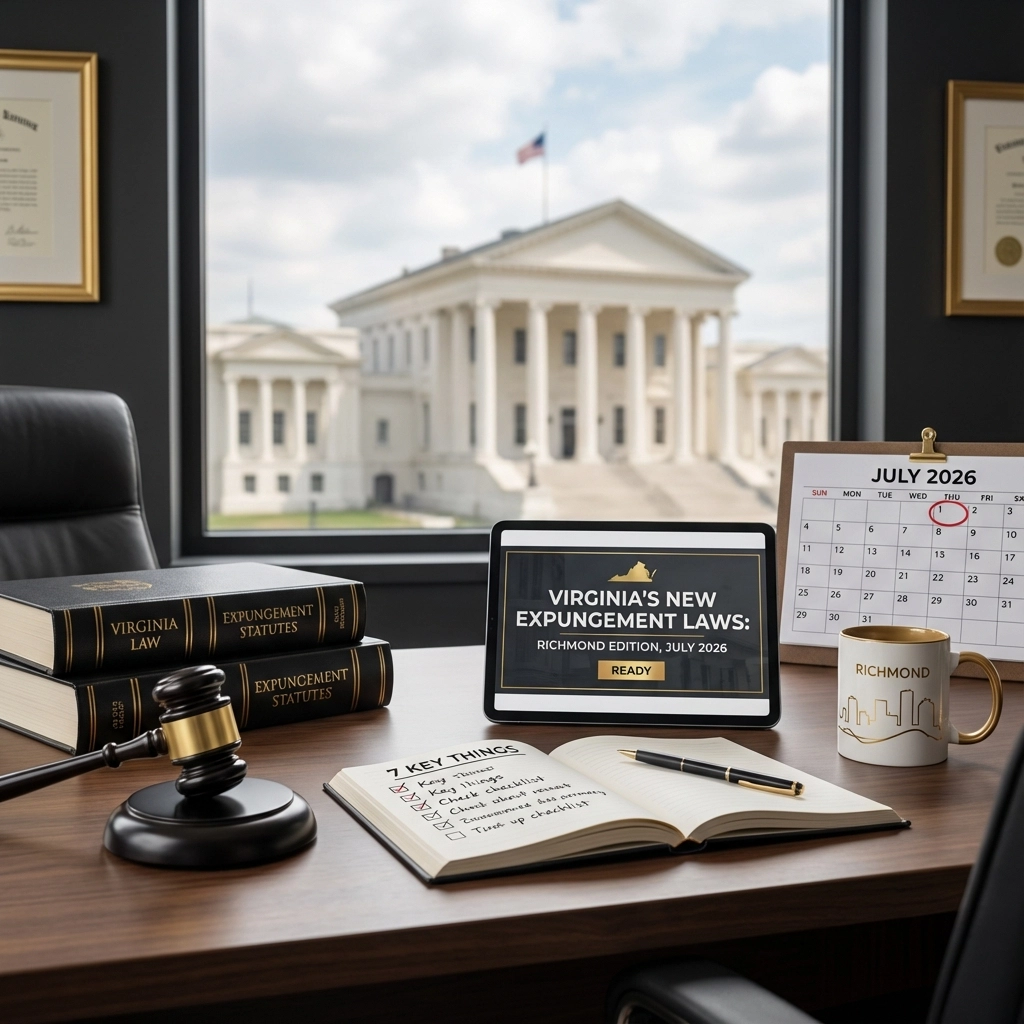
Time is running out. In exactly six months, Virginia's criminal record laws will change forever. On July 1, 2026, the most significant expansion of expungement and record sealing in Virginia history takes effect.
The decisions you make in the next six months could determine whether you spend the rest of your life explaining a criminal record: or whether you finally get a clean slate.
Here's what every Richmond resident needs to understand about these game-changing laws before it's too late.
1. For the First Time Ever, Felony Convictions Can Be Sealed
This changes everything.
Starting July 1, 2026, Virginia will allow Class 5 and Class 6 felony convictions to be sealed. This represents a complete reversal from Virginia's historically harsh stance on criminal records.
Before this law, Virginia only allowed expungement of cases where you were found not guilty, charges were dismissed, or you received a pardon. If you were convicted of anything: even a minor felony: that record followed you forever.
That reality ends in six months.
Class 5 and Class 6 felonies include crimes like:
- Grand larceny (theft over $1,000)
- Credit card fraud under $1,000
- Possession with intent to distribute marijuana (small amounts)
- Certain drug possession charges
- Some white-collar offenses

The catch? You must wait 10 years after completing your sentence and remain conviction-free during that entire period. But for the first time in Virginia history, these convictions won't have to define your future forever.
2. Some Records Will Disappear Automatically: No Action Required
The best news yet: you might not have to do anything at all.
The new law establishes automatic sealing for specific types of records:
- Misdemeanor non-convictions (dismissals, not guilty verdicts)
- Nine specific types of misdemeanor convictions
- Deferred dismissals for underage alcohol and marijuana possession
If your record qualifies for automatic sealing, it happens without you filing a petition, paying fees, or appearing in court. The system will identify eligible records and seal them automatically.
But here's the critical part: just because some records seal automatically doesn't mean you should wait and hope yours qualifies. The automatic sealing only covers a narrow category of cases.
3. Most Records Still Require a Court Petition: But the Process Gets Easier
For everything else, you'll need to ask the court.
Misdemeanor convictions can be sealed through petition after 7 years of remaining conviction-free. Eligible felony convictions require 10 years of staying out of trouble.
The petition process involves:
- Filing in Circuit Court where you were convicted
- Demonstrating "good cause" to seal your record
- Appearing before a judge who considers factors like:
- Time elapsed since conviction
- Impact on your employment and housing
- Evidence of rehabilitation
- Public safety considerations

Here's what the judge will be looking for: proof that sealing your record serves the interests of justice and that you've genuinely turned your life around. This isn't automatic: you need to build a compelling case.
4. Strict Eligibility Rules Will Disqualify Many People
The new law comes with iron-clad restrictions that will crush your chances if you don't qualify.
You cannot use this law if you have:
- Prior convictions for Class 1 or Class 2 felonies (ever)
- Class 3 or Class 4 felony convictions within the past 20 years
- Any other felony convictions within 10 years of filing
- Multiple convictions for the same offense you're trying to seal
The message is clear: these benefits are reserved for people who made mistakes, learned from them, and stayed out of trouble. If you have a pattern of criminal behavior or serious violent convictions, you're permanently excluded.
This means timing becomes everything. If you're approaching your 7-year or 10-year mark, any new conviction resets the clock completely.
5. Certain Crimes Can Never Be Sealed: Ever
Some doors close forever.
The law permanently excludes these offenses from any record relief:
- Class 1-4 felonies (the most serious crimes)
- Violent crimes including kidnapping, abduction, involuntary manslaughter, and maiming
- Domestic assault and battery
- All DUI and DWI offenses: no exceptions
- Sexual offenses
- Crimes against children
If you have any of these convictions, the new law offers you nothing. These exclusions reflect Virginia's commitment to public safety and victim protection: and they're absolute.

The DUI exclusion is particularly significant because these are among the most common criminal convictions in Virginia. If you're convicted of DUI, that record stays with you permanently, regardless of how much time passes.
6. The Financial Barriers Disappear Completely
This might be the most important change of all.
Under the new law, all filing fees and court costs for expungement and sealing petitions are eliminated. Previously, these costs could run several hundred dollars: a significant barrier for many people seeking record relief.
Even better: if you can't afford an attorney for the petition process, the court must appoint counsel to represent you. This ensures that lack of money won't prevent you from accessing these new rights.
But don't mistake "free" for "easy." Just because there are no costs doesn't mean the process is simple. These petitions require careful preparation, compelling arguments, and strategic presentation to convince a judge that your record should be sealed.
7. Private Background Check Companies Must Delete Sealed Records
The law reaches beyond government databases.
One of the most frustrating aspects of criminal records has been their persistence in private databases. Even when government records were restricted, background check companies often maintained their own copies, which continued to appear in employment and housing screenings.
The new law changes that completely. Private companies that buy and sell criminal record information must routinely delete sealed records from their databases. If they refuse to comply, you have a legal right to take action against them.
This means when your record is sealed, it should truly disappear from the background checks that matter most: employment screenings, housing applications, and professional licensing reviews.

What This Means for Your Future
These changes represent the most significant criminal justice reform in Virginia's history. For the first time, Virginia acknowledges that people can change, grow, and deserve second chances.
But the window is narrow, and the requirements are strict. If you have a criminal record that might qualify for sealing under these new laws, you need to start preparing now.
The petition process will require:
- Gathering complete court records
- Documenting your rehabilitation efforts
- Building evidence of how your record affects your life
- Presenting a compelling case to a judge
This isn't something you want to tackle alone. The stakes are too high, and the legal requirements too complex.
Time to Act
July 1, 2026 is coming whether you're ready or not. The question is whether you'll be prepared to take advantage of these historic changes, or whether you'll watch this opportunity slip away.
Your criminal record doesn't have to define your future forever. But getting rid of it requires more than hope: it requires strategic action and experienced legal guidance.
If you're ready to explore whether these new laws can help clear your record, contact Alex Taylor Law today. We'll review your case, explain your options, and help you navigate this complex process.
Because when it comes to your future, you deserve a fighting chance.