When you're injured due to someone else's negligence in Virginia, the evidence you collect in those critical first days and weeks could be the difference between full compensation and walking away with nothing. That's not an exaggeration: Virginia's strict legal standards mean that weak evidence doesn't just reduce your settlement. It destroys it entirely.
The reality is this: insurance companies and defense attorneys are building their case against you from the moment your accident happens. While you're focused on healing, they're gathering evidence to minimize or eliminate your claim. The question isn't whether you need evidence. The question is whether you have the right evidence to fight back.
Understanding Virginia's Evidence Standards
Virginia operates under what's called the "greater weight of the evidence" standard. This means you must prove your case is more likely true than not: essentially, 51% certainty. But here's what makes Virginia different from most states: our contributory negligence law means even 1% fault on your part can cost you everything.

You must establish four critical elements with your evidence:
The defendant owed you a duty of care. This seems obvious, but proving it requires documentation of the relationship and circumstances that created this legal obligation.
The defendant breached that duty. You need concrete proof they failed to act as a reasonable person would in the same situation.
The breach directly caused your injuries. This is where many cases fall apart: you must connect the dots between their actions and your harm with unshakeable evidence.
You suffered measurable damages. Every dollar you're claiming must be documented, quantified, and proven.
Missing evidence for any one of these elements means your case crumbles. That's why the evidence you gather today determines whether you'll recover tomorrow.
Medical Evidence: Your Foundation of Proof
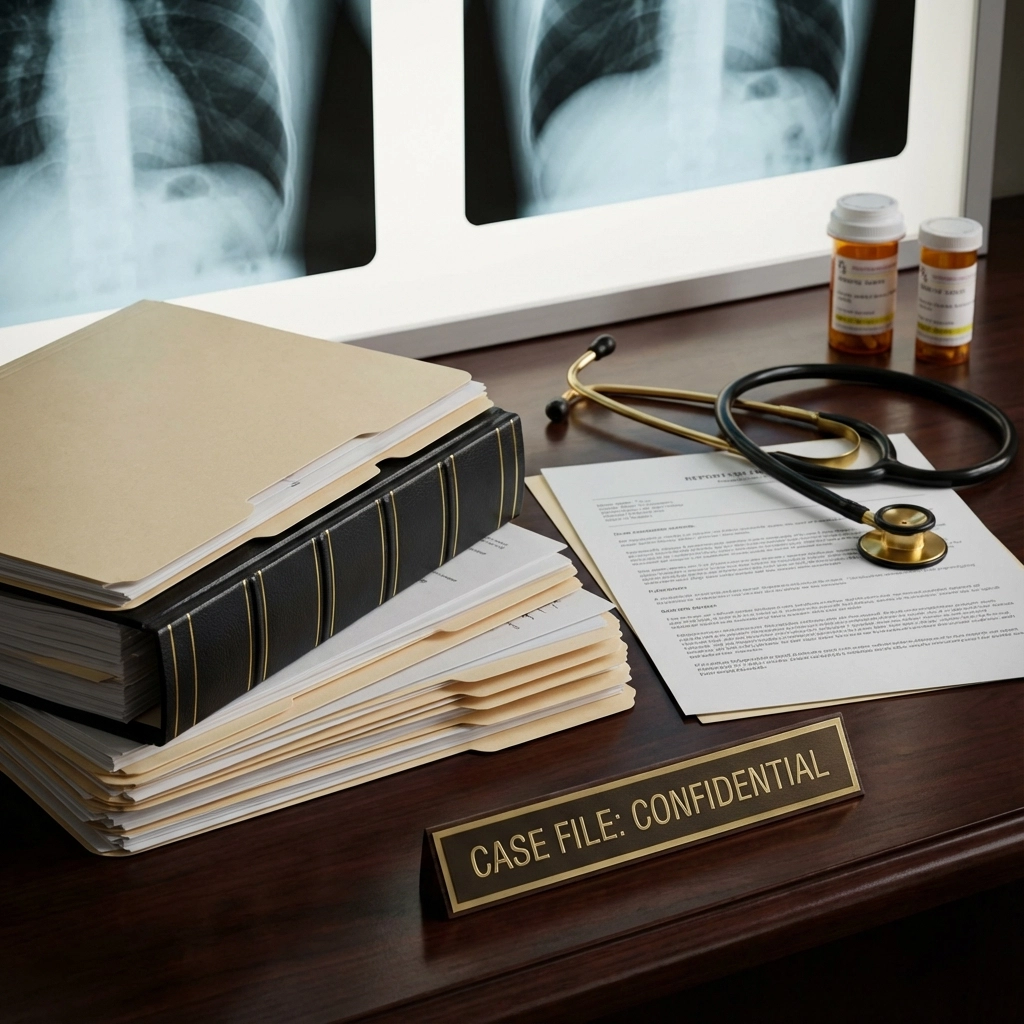
Your medical records aren't just documentation of your treatment: they're the backbone of your entire case. Without comprehensive medical evidence, you're essentially asking a jury to take your word that you were injured. That's not enough in Virginia.
Immediate Medical Documentation
Seek medical attention immediately after your accident, even if you feel "fine." Adrenaline masks pain, and some injuries don't manifest symptoms for hours or days. Your medical records need to show an unbroken chain from the accident to your injuries.
Document everything: emergency room visits, diagnostic imaging, specialist consultations, physical therapy sessions, and follow-up appointments. Each medical interaction creates evidence that strengthens your claim.
Ongoing Treatment Records
Your case isn't just about your immediate injuries: it's about how those injuries affect your life long-term. Maintain detailed records of:
- Doctor's appointments and treatment recommendations
- Medication prescriptions and their effects
- Physical limitations and work restrictions
- Pain levels and recovery progress
Virginia's Medical Records Rules
Under Virginia law, your medical records can be admitted in court if you provide the opposing party with copies and written notice at least 10 days before trial, along with a sworn declaration of their accuracy. This procedural requirement means proper documentation isn't just helpful: it's mandatory.
Visual Evidence: Making Your Case Undeniable
Insurance adjusters and juries relate to what they can see. Powerful visual evidence transforms your story from words into undeniable reality.
Accident Scene Documentation
Take photographs immediately if you're able, or have someone do it for you. Capture:
- The entire accident scene from multiple angles
- Traffic signs, signals, and road conditions
- Weather conditions and lighting
- Property damage to all vehicles or structures involved
- Skid marks, debris, and other physical evidence
Injury Documentation
Photograph your injuries immediately and track their progression over time. This creates a visual timeline of your pain and recovery. These images often carry more weight with juries than medical reports alone.
Surveillance and Video Evidence
Modern life is recorded constantly. Look for:
- Security cameras from nearby businesses
- Traffic cameras at intersections
- Dashcam footage from other vehicles
- Cell phone videos taken by bystanders
Time is critical here. Surveillance footage is typically deleted after 30-60 days. Every day you wait is evidence that disappears forever.
Witness Statements: Independent Voices for Your Truth
Witnesses provide the objective perspective that transforms your account from "he said, she said" into credible testimony. But witnesses disappear, forget details, and become harder to locate as time passes.
Identifying Quality Witnesses
The best witnesses are those with no connection to either party who clearly observed the incident. Passengers in your vehicle aren't ideal: juries assume they're biased. Independent witnesses carry the most weight.
Collecting Witness Information
At the scene, gather:
- Full names and contact information
- Brief written statements about what they observed
- Permission to contact them later for formal statements
Formal Witness Statements
Within days of your accident, obtain detailed written statements from witnesses. These should include:
- Their location when the incident occurred
- What they saw happen step by step
- Weather and visibility conditions
- The behavior of all parties involved

Official Reports: Third-Party Documentation
Police reports and incident reports provide independent, official documentation of your accident. These reports carry significant weight because they come from neutral third parties trained in accident investigation.
Police Reports
Even in minor accidents, call the police. Police reports typically include:
- Officer observations about fault
- Statements from all parties involved
- Citations issued
- Diagrams of the accident scene
Property Incident Reports
For slip-and-fall or premises liability cases, request incident reports from property managers. These often reveal previous complaints about the hazardous condition that injured you.
Financial Documentation: Proving Your Damages
Every dollar you're claiming must be documented with precision. Insurance companies scrutinize financial claims intensively, looking for any reason to reduce your compensation.
Lost Income Evidence
Gather:
- Pay stubs showing your income before the accident
- Tax returns demonstrating earning patterns
- Letters from employers confirming missed work
- Documentation of lost overtime or bonuses
Medical Expenses
Maintain organized records of:
- Hospital and doctor bills
- Prescription costs
- Medical equipment expenses
- Travel costs for medical appointments
Future Financial Impact
Work with medical professionals to document how your injuries will affect your future earning capacity and ongoing medical needs. This forward-looking evidence often represents the largest portion of your compensation.
Pain and Suffering Documentation
Virginia allows recovery for pain and suffering, but you must prove it. This intangible harm requires creative documentation strategies.
Keep a detailed daily journal recording:
- Pain levels on a scale of 1-10
- Activities you can no longer perform
- Emotional impacts of your injuries
- Sleep disruption and medication side effects
The challenge: pain and suffering damages are subjective. The solution: objective documentation that makes your subjective experience tangible to juries.

Evidence Preservation: Your Legal Obligation
Virginia law requires you to preserve evidence that may be relevant to reasonably foreseeable litigation. Failing to preserve evidence can destroy your case even before it begins.
This includes:
- Physical evidence from the accident scene
- Electronic communications about the incident
- Social media posts related to your activities
- Vehicle maintenance records
Here's the critical point: once you're aware that litigation is possible, you have a legal duty to preserve relevant evidence. Destroying or losing evidence after this point can result in sanctions against you.
How Virginia's Contributory Negligence Law Changes Everything
Virginia is one of only a few states that still follows pure contributory negligence. This means if you're found even 1% at fault for your accident, you recover nothing. Zero. This harsh rule makes strong evidence absolutely critical.
Insurance companies know this law. They're looking for any evidence that you contributed to your accident, no matter how minimally. That's why your evidence must not only prove their fault: it must eliminate any possibility of fault on your part.
For more details about how this law could affect your case, visit our comprehensive guide on contributory negligence in Virginia.
The Time Factor: Evidence Has an Expiration Date
Physical evidence deteriorates. Witnesses forget. Security footage gets deleted. Every day you wait is evidence that vanishes forever.
Virginia's statute of limitations gives you two years to file most personal injury claims, but your evidence gathering window is much shorter. Start immediately.
How Alex Taylor Law Supports Your Evidence Gathering
At Alex Taylor Law, we understand that gathering comprehensive evidence while you're recovering from injuries is overwhelming. We handle the investigative work so you can focus on healing.
Our approach includes:
- Immediate accident scene investigation
- Professional photography and reconstruction
- Witness interviews and statement collection
- Medical record organization and analysis
- Expert witness coordination
We know how to build bulletproof cases that withstand Virginia's tough legal standards. Your evidence strategy could be the difference between compensation and walking away empty-handed.
The bottom line: In Virginia, strong evidence isn't just helpful: it's everything. The decisions you make about evidence gathering in the days after your accident determine whether you'll recover the compensation you deserve.
Don't let critical evidence slip away while you're focused on recovery. Contact Alex Taylor Law today to ensure your case is built on the solid foundation it needs to succeed.
Your injuries deserve justice. Let us be your soldier in a suit.